Cato Networks
Cato Networks Expand SASE Footprint In The UAE With E& Partnership
Connected Networks is excited to announce a further expansion of our long-standing partnership with Cato Networks.
Read more

The carrier map for Saudi Arabia you looked at eighteen months ago is probably already wrong.
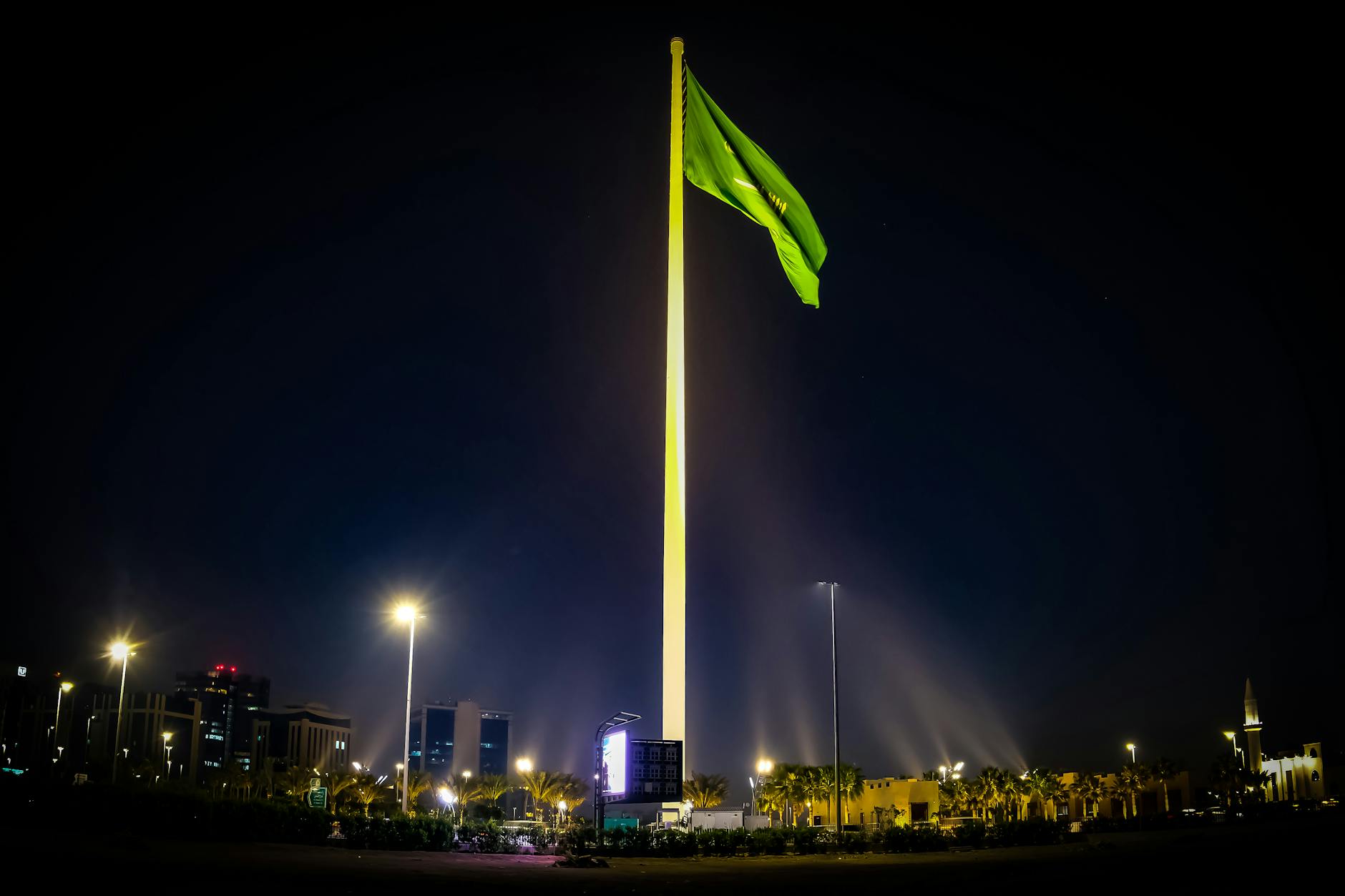
The carrier map for Saudi Arabia you looked at eighteen months ago is probably already wrong.
The carrier map for Saudi Arabia you looked at eighteen months ago is probably already wrong. Vision 2030 is pumping investment into infrastructure at a pace that outstrips most provider databases — new cable systems, new data centre builds, new cloud regions, giga-projects demanding connectivity in locations that had nothing three years ago. What hasn't changed is this: one carrier still dominates, the Red Sea remains a single point of failure for most international traffic, and the pricing is the highest in the Gulf.
STC is the market. It holds around 70% of consumer and enterprise eyeballs, lands the majority of Saudi Arabia's submarine cables, and takes roughly 80% of sector profits. If your business needs to reach local users — employees, clients, visitors hitting your Saudi infrastructure — STC's network is the right answer. That quality costs: expect $9,000–18,000/month for a 100Mbps DIA circuit, with STC consistently at the top end.
Mobily is a genuine second option with meaningful local traffic share and more competitive pricing. Zain Saudi operates as the third player. And then there's Go Atheeb — a Saudi enterprise fixed-line carrier that most international providers have never heard of, let alone worked with directly. We have. For specific requirements and locations, Go Atheeb offers options that the headline carriers don't.
For clients routing to Northern Europe, Kalaam's KNOT terrestrial runs through Saudi Arabia as part of its Kuwait–Bahrain–Saudi–UAE–Qatar corridor. Combined with their EIG co-ownership, it provides an exit path that doesn't depend on the Red Sea.
Saudi Arabia's geographic scale matters more than buyers expect. Riyadh to Jeddah is 950km. Carrier availability in one city doesn't guarantee the same options in the other — we've delivered in both, and they're different procurement exercises. Dammam and the Eastern Province, where the oil industry is concentrated, have their own carrier dynamics again.
Riyadh is the primary enterprise hub: government, financial services, multinationals with Saudi headquarters. Azure Saudi Arabia North is here. Jeddah is commercial and port-focused — Azure Saudi Arabia West covers this region. Major cloud providers have been moving fast on Saudi PoPs, partly driven by the government's cloud-first initiative. That's genuinely new and useful for businesses with data residency requirements, though it doesn't solve the international routing question for companies whose primary compute remains in Europe.
We've delivered for international law firms and pharma companies operating out of both cities. The brief is usually the same: a Saudi office that needs reliable, high-performance connectivity back to a European DC or cloud region, with a service that escalates properly when something goes wrong at an awkward hour.
Most enterprise traffic leaving Saudi Arabia for Europe or Asia transits the Red Sea. The cables converge at the Bab el-Mandeb strait — a chokepoint 30km wide — before heading north towards the Mediterranean. In early 2024 and again in September 2025, Houthi-related disruptions caused significant cable damage here. These weren't minor incidents; they affected international traffic across the region for weeks.
True geographic diversity from Saudi Arabia requires terrestrial transit across the country between the Red Sea coast and the Gulf coast — where cables head toward India and Asia-Pacific. That crossing depends on Saudi backbone infrastructure, predominantly STC, Mobily, or Zain. Overland alternatives running north through Jordan into Europe exist, but they're expensive, higher-latency, and cross multiple jurisdictions.
New cable systems are reducing this risk. Blue-Raman (Google-backed) is specifically designed to bypass the Bab el-Mandeb. SeaMeWe-6, ANDROMEDA, and Africa-1 are also coming online through 2027. But for now, any enterprise with material Europe-facing traffic and no resilience architecture is more exposed than they probably realise.
We start with your requirement, not a carrier list. Where does your traffic need to go — Saudi local users, Northern Europe, or both? Is Red Sea resilience a hard requirement? Single circuit or dual? What's your lead time? Any vendor preferences? Once we understand that, we'll recommend the right 3–5 options for your specific address in Riyadh or Jeddah. Our Nexus platform covers 2.5 billion buildings globally — we know what's serviceable before we make a recommendation.
For clients where local traffic matters — Saudi users hitting your applications — we start with STC. For clients where international routing to Northern Europe is the priority and Red Sea risk is a concern, we build around Kalaam's KNOT and EIG path as the diversity layer. And for clients who've been quoted eye-watering STC prices and assumed there's no alternative, we put Go Atheeb and Mobily in the conversation.
Delivery in Saudi Arabia runs 8–12 weeks, consistent with the wider Gulf. Giga-project sites — NEOM, Red Sea Project — are a different conversation; the infrastructure assumptions that apply in Riyadh and Jeddah don't hold in locations that are being built from scratch.
Most Saudi enterprise buyers default to STC. It's the safe choice — dominant network, local presence, easy escalation path. The problem is that STC routes international traffic the same way as everyone else: through the Red Sea, through the same congested cable corridors, with the same exposure to the same chokepoint.
Nobody gets fired for buying STC. But after a Red Sea disruption knocks out international connectivity for a week, the post-mortem conversation always includes the same question: why didn't we build in resilience? And the answer is almost always the same: because someone assumed STC was reliable enough.
We know four carriers in the Saudi market, not two. We know Go Atheeb — which most international providers have never engaged with. We know which cable systems are being built and what they mean for routing resilience over the next two years.
Our clients in Saudi Arabia are operating in sectors where connectivity failure has direct business consequences: legal work that stops, transactions that can't complete, audit trails that go dark. We build carrier selection around their actual traffic patterns, not around which carrier has the biggest brand in the market. Get a quote through Nexus and we'll show you the full picture.
How much does enterprise internet cost in Saudi Arabia?
The most expensive in the Gulf. A 100Mbps DIA circuit runs $9,000–18,000/month depending on carrier and location. STC is typically at the top end; Mobily and Go Atheeb offer more competitive pricing for specific requirements.
How long does a circuit take in Saudi Arabia?
8–12 weeks for a standard enterprise DIA circuit in Riyadh or Jeddah. Giga-project sites and locations without existing carrier infrastructure will take longer — talk to us early if you have a hard deadline.
Is the Red Sea routing risk real?
Yes. Major cable disruptions at the Bab el-Mandeb in early 2024 and September 2025 affected international traffic across the region. If your business depends on reliable Europe-facing connectivity, routing diversity is worth building in.
Which carrier should we use in Saudi Arabia?
We don't work from a fixed panel. We qualify your requirement first — whether local Saudi traffic matters, how critical Northern Europe routing is, whether Red Sea resilience is non-negotiable, lead time — then recommend the right 3–5 carriers for your specific address in Riyadh or Jeddah. STC, Mobily and Go Atheeb are among the options in Saudi Arabia — carrier selection is driven by your traffic patterns and routing requirements, not a panel.
Can you deliver in Riyadh and Jeddah?
Yes — we have direct delivery experience in both cities. They're different procurement exercises; carrier options and timelines vary between them.
What about NEOM and the giga-projects?
Infrastructure at these sites is being built as the projects develop — it's not like quoting a Riyadh office. If you have requirements for giga-project connectivity, talk to us; it's a case-by-case situation.
Get an instant price indication through our Nexus platform — no sales call required unless you want one.
Get an instant quote →
Book a call with our Middle East team →
Also operating in the region: UAE · Qatar · Bahrain · Oman · Kuwait
See our full global coverage or learn more about enterprise internet connectivity services.
Contact Connected Networks’ team using any of the mediums below and we will be happy to help in any way we can.